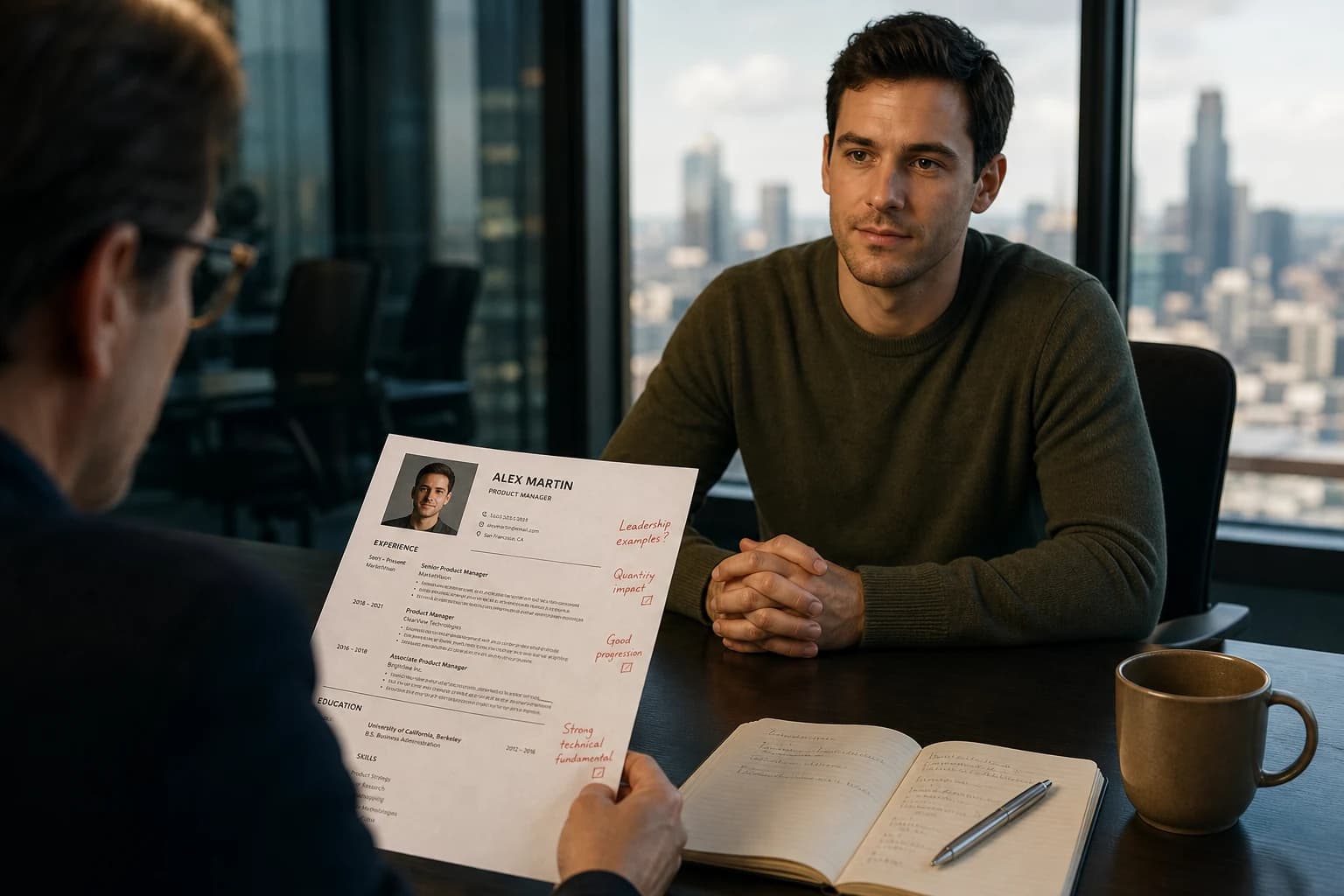
How to tailor your resume to a job offer (in under 15 minutes)
A short method to tailor a resume to one job offer: what to keep, what to cut, and how an AI match score tells you if you are ready to send.

A tailored resume is not a new career history. It is the same career, reordered and reworded so the first screen answers: "Can this person do this job?" Recruiters compare your file to one posting, not to your entire life.
Read the offer like a spec
Split the posting into three piles: must-have skills, nice-to-have skills, and outcomes (grow revenue, reduce incidents, ship a product). Your CV should prove the must-haves in the first third of the page. Nice-to-haves can live in a skills list. Outcomes belong in bullets.
Reorder before you rewrite
- Move the most relevant role or project to the top of Experience.
- Drop or shorten roles that fight the story (a decade-old internship rarely helps a senior application).
- Align your headline with the job title only if it is truthful.
- Put matching tools in Skills in the same order the posting uses when you can.
Rewrite three bullets, not thirty
You do not need to rebuild the whole CV. Take the two most relevant jobs and rewrite the top two or three bullets so they use the employer's nouns (the product type, the customer, the stack). Keep your numbers. That is usually enough to lift a job-match score.
Use AI as a second pair of eyes
Paste the job offer and your current résumé into Curribellum. The match score tells you if the story is close. Missing keywords tell you what to add. The rewrite is a draft of a tailored CV. You accept the lines that are true and reject the rest. One credit, one posting, one version you can send the same afternoon.
When not to tailor
If you lack the core requirement (a license, a language, five years of a stack you have never touched), no rewrite will fix that. Tailoring works when the fit is real but poorly explained. Do not invent experience to chase a score.
Make it a habit
Save each analysis. Next week, when a similar role appears, you start from a closer draft instead of a generic CV. That is how people who "always tailor" actually keep up with a busy search.
Also useful: How to write a cover letter that matches the job offer, How to pull resume keywords from a job offer (without stuffing), How to improve your CV: a checklist that actually gets interviews.